
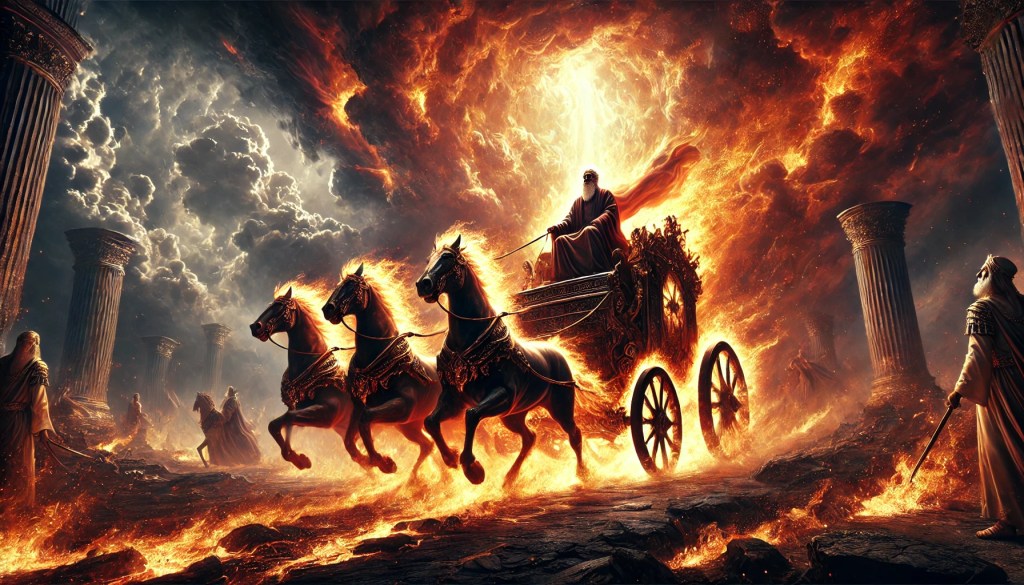
1 Kings 17 – 19; 2 Kings 1 – 2
I remember getting baptized less than ten years ago and feeling so excited about it. Faith in Jesus Christ was not just something I identified with because many people around me did. I had reasoned and come to a conscious decision to accept Jesus as Lord and King in my life—to please Him even when it was distasteful to the world. One year after my baptism, I was appointed president of my spiritual fellowship in school. I preached sermons, engaged in Bible studies, and was part of evangelism and prayer meetings. It gave me so much joy to do these.
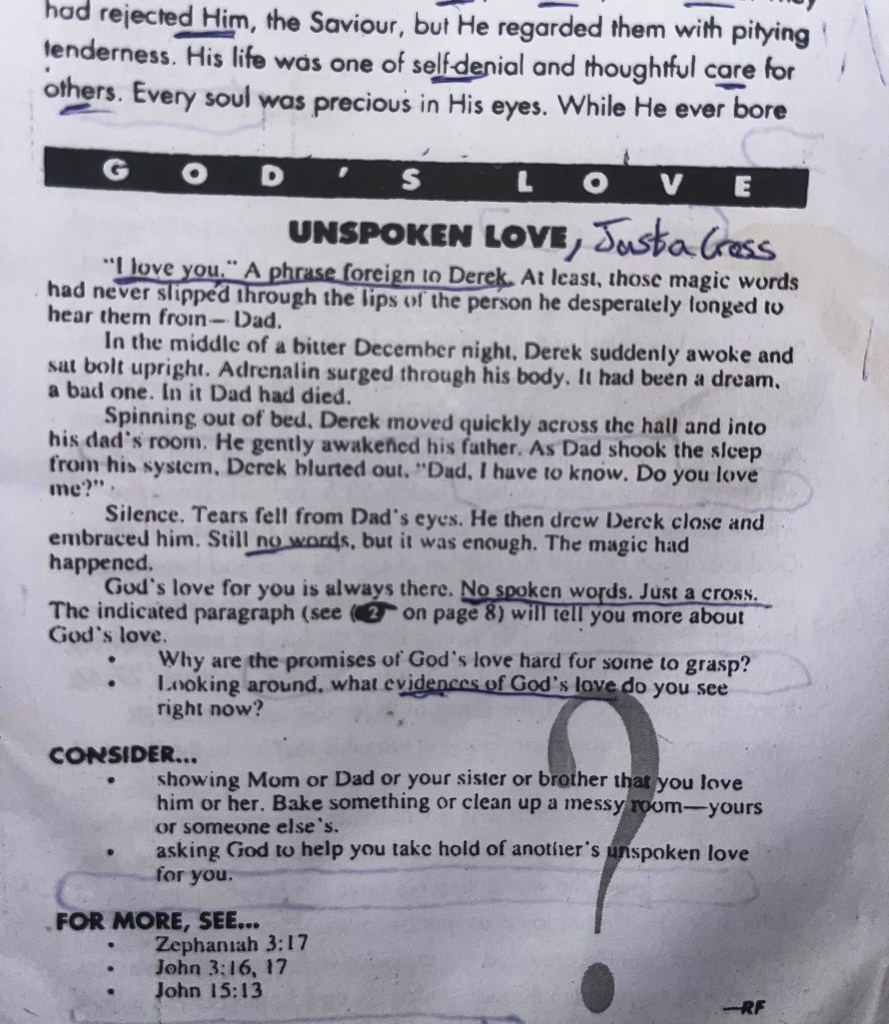
Fast forward to my national service year. I had graduated and was no longer fellowship president. I still attended church programs regularly, but something just felt off. One way to explain this feeling is through a story in the youth version of a book titled Steps to Christ. The boy knew his father loved him, but he had never heard his father say the words, “I love you.” I knew God loved me, but I kept asking: Why does He feel far away? Why can’t I hear God speak to me? How can I say with much assurance that God exists, just as Enoch, Abraham, Paul, Mary, and other godly people did, when I don’t seem to have evidence of His presence in my life? How?
Experiencing God’s Power
One Bible character I relate to so much is Elijah, so it just makes sense to start the Bible characters series with him. Elijah, the Tishbite of the inhabitants of Gilead, was a prophet raised up in the time of King Ahab. The leader continued to do evil in the sight of God, married an idolatrous wife, and served Baal instead of the true God—but not Elijah.

God catered for Elijah’s needs in ways that made it obvious it was God and not human wisdom:
- Stingy birds—ravens—brought food twice daily.
- God did not stop the brook from drying during the drought. When it dried, another provision came.
- Another unlikely source—a widow, one who was preparing to die from lack—was used. Elijah even assured her that God would provide so the flour would never finish and the oil would never dry. I find it intriguing that the drying of Brook Cherith did not stop Elijah from believing the oil would not dry.
- God used Elijah to revive the widow’s son (just as the widow was already recognizing her sins and her need for repentance through Elijah’s interactions with her) (1 Kings 17:18).
- When the time came, Elijah stood on Mount Carmel representing God. He stood alone on one side, and on the other side were 450 prophets of Baal and 450 prophets of Asherah. With his head held high, confident in the God of heaven, Elijah stood for God.
- Elijah repaired the altar of God and called all the people to repentance and revival.
- Elijah prayed for rain until he saw the sign of rain.
Doubting God’s Involvement
The hand of God was evident in Elijah’s ministry. God had protected, provided for, and guided him all that period, yet Elijah heard from a messenger that his life was in danger—and he ran. This time, he did not run according to God’s directives but on his own. He ran because Jezebel threatened to kill him, and then he went on to pray to God for death.

But he himself went a day’s journey into the wilderness, and came and sat down under a broom tree. And he prayed that he might die, and said, “It is enough! Now, Lord, take my life, for I am no better than my fathers!”
(1 Kings 19:4)
Elijah’s situation looks like that of a minister who has put so much effort, zeal, and resources into reaching souls, hoping that people will come to the knowledge of God’s love, but instead no soul seems to be won. His experience reminds me of the feeling of loneliness—not because there are no other people, but because no one seems to understand his struggles or his passion for God’s cause. Elijah didn’t know them, but God had people who still served Him.
So he said, “I have been very zealous for the Lord God of hosts; for the children of Israel have forsaken Your covenant, torn down Your altars, and killed Your prophets with the sword. I alone am left; and they seek to take my life.”
(1 Kings 19:10)
Yet I have reserved seven thousand in Israel, all whose knees have not bowed to Baal, and every mouth that has not kissed him.
(1 Kings 19:18)
God did not leave Elijah in his ignorance and sadness but showed forth His fatherly love and mercy.
- An angel touched Elijah twice (1 Kings 19:5, 7).
- God fed Elijah with food and drink (1 Kings 19:6, 8).
- Elijah had good sleep (1 Kings 19:5, 6).
- Elijah had a personal revival period with God—forty days and forty nights (1 Kings 19:8).
- . God spoke directly to Elijah’s situation, instructing him on the next steps to take.
The touch of community (a tap on the shoulder, holding hands in prayer), good nutritious meals, and sufficient sleep remain God’s methods of healing our minds and bodies till this day. If our bodies are sick, we won’t hear from God well. God seeks to heal us inside and out. After calm had come into Elijah’s life through touch, food, and sleep, God continued the pursuit of His son. Just as He asked Adam, “Where are you?” (Genesis 3:9), He asked Elijah, “What are you doing here, Elijah?” (1 Kings 19:9).
Elijah’s experience is a reminder to trust God. Expectations may be dashed, dangers may abound, but if we are doing God’s bidding, we can rest assured that God knows.
God, a Father
In my case, I did not stand on Mount Carmel, nor did I repair an altar. My experience was different, but I experienced a “valley” moment after my “mountaintop” moment. I praise God, for He is love. Elijah received the touch of an angel; I received an out-of-the-blue prayer from a friend. Elijah received food and drink; in my case, I had a wholesome discussion about my faith with a church elder. I learned to rest in God’s Word and that God is ever near. God is near, but I can choose to be far from Him—hence the need for daily communion with my heavenly Father.

Still Small Voice…
Then He said, “Go out, and stand on the mountain before the Lord.” And behold, the Lord passed by, and a great and strong wind tore into the mountains and broke the rocks in pieces before the Lord, but the Lord was not in the wind; and after the wind an earthquake, but the Lord was not in the earthquake;
and after the earthquake a fire, but the Lord was not in the fire; and after the fire a still small voice.
So it was, when Elijah heard it, that he wrapped his face in his mantle and went out and stood in the entrance of the cave. Suddenly a voice came to him, and said, “What are you doing here, Elijah?”
(1 Kings 19:11–13)
God was not in the strong wind.
He was not in the earthquake.
No, not even in the fire.
God came with the still small voice.
God is able to cause the strong wind; He is able to send the earthquake and the fire, but the absence of these does not mean the absence of God. After Jesus resurrected, He could have performed a miracle to prove He is God, but instead, He referred them to the Scriptures that spoke of Him. It is not enough to be used by God to call down fire—because in our secret corners, do we have a relationship with God?
 Little Tittles
Leave a comment